Business language, connected to real data
Link business objects, relationships and field meanings to connected sources. Answers can cite authorized descriptions; query results preserve real values.
 KernelMy Kernels
BUILT ON DIGITAL ONTOLOGY
Kernel is a digital operating system for individuals and enterprises, built on digital ontology, connecting people and organizations through a collaboration network.
Connect the knowledge we build with real data. Let agents understand our work, take part in authorized actions, and learn from verified outcomes.
My KernelsEarly access · Choose how to start, without an email form
DigitalONE CONTINUOUS PROCESS
Link business objects, relationships and field meanings to connected sources. Answers can cite authorized descriptions; query results preserve real values.
Let agents analyze situations, prepare proposals and participate in business actions within granted authority. People review changes that require confirmation; permissions and versions are checked, and results remain verifiable.
Retain original conversations, description sources and corrections. Maintain descriptions and candidate definitions; only reviewed and published content becomes usable formal knowledge.
Internal operations, management, organizational learning and ongoing development, and external exchange and cooperation, are equally important values that can each stand on their own.
The current development version supports authorized knowledge reads, real data queries and candidate maintenance. General automation of external systems still needs adapters. Growth is a traceable maintenance process, not fully autonomous business management.
Industry packages provide composable, traceable reference frameworks. The enterprise manual and ontology mapping retain our own understanding. Daily additions and corrections enter a maintenance process, turning small pieces of work into gradual implementation.
Open-source starter packsFor individuals and enterprises
People can extend the usefulness of their experience, views and relationships; enterprises can sustain capabilities and shared work. These simulated examples feature a business owner and international cooperation. The same approach applies between individuals and between people and organizations, with each retaining their data, permissions and responsibility for judgment.
Anyone can present their experience, views, direction and selected relationships through a digital persona, and continue authorized external interactions. Digital Presence is an entry for understanding and contact; second presence is delegated participation in a particular relationship. People can exchange with friends, colleagues, advisers and members, contributing within organizational roles and permissions when joining a company or association.
Network Federation connects sovereign personal and organizational domains. By mutual agreement, participants exchange bounded needs, capabilities and information around shared matters, recording owners, versions and progress. Internal Kernel verification supports credible external information; outside needs and feedback enter internal work after confirmation.
Simulated stories: people, companies, figures and events are fictional, illustrating product direction rather than customer results. Complete relationship management, second presence, automatic sharing, live global mapping and autonomous operation still require development and validation. Authorized semantics, real queries and candidate maintenance provide a starting point.
For individuals and enterprises

Simulated example: Alex leads a US equipment business. His persona entry presents his experience, company direction and capabilities approved for public sharing. An entrepreneur from another country introduces a cooperation need. The persona answers public questions, requests necessary background and helps both sides exchange selected information.
A summary records the exchange and unconfirmed next steps. Alex reviews it and chooses a meeting, a colleague handoff or continued discussion. New disclosures, formal quotations and commitments require the appropriate authority. No private archive is opened automatically and no completed deal is invented.
General valueMake anyone’s outward presence an entry for mutual understanding; in this business-owner example, personal relationships lead to company opportunities confirmed by the person.For individuals and enterprises

Simulated example: Alex, a manufacturer abroad and other partners retain separate personal or enterprise domains. They agree on a shared cooperation matter, publishing only bounded needs, capabilities, delivery conditions and information, with owners, versions, progress and pending decisions.
Each internal team uses its own Kernel to verify capabilities and prerequisites, then contributes findings under permission. Exchanges, proposals, decisions and execution feedback remain connected. Unconfirmed conditions and differing views stay visible; responsible people decide next steps and bring useful feedback into internal development.
General valueConnect sovereign participants through shared matters, reinforcing internal operations and external cooperation while preserving permissions and accountable judgment.NETWORK FEDERATION
A person can hold years of experience, yet has limited time and attention to explain it. A digital ontology can preserve the reasons, conditions and context behind their judgments. Our direction is to make that understanding available to more relationships, with the person retaining control.
A digital persona draws on experience, values and feedback. A second presence is its authorized participation in a particular relationship: continuing a discussion, explaining a viewpoint or preparing a shared task when you are unavailable. It identifies itself as delegated, preserves context and returns to you when judgment or new authority is needed. Friends and colleagues may receive different topics and levels of disclosure.
Within an organization, members could contribute more than the work they perform in person: their experience, methods and selected connections could help colleagues, customers and partners over time. Leaders can start with a real decision and reflection; every member can add expertise and challenge assumptions. Personal advice becomes organizational knowledge only through review and explicit adoption; an opinion is not an approval.
Network Federation connects sovereign personal and organizational domains, including enterprises, associations and clubs. Its planned functions cover identity and representation, recipient-specific topic permissions, requests and delivery, encrypted transport, receipts and withdrawal. MyKernel and Workbench support private preparation; Shared and Workspace support exchange and joint work. Personal and organizational identities, data and responsibilities stay distinct.
Implemented: authorized knowledge reading, real data queries and candidate maintenance. Experimental: cross-domain encryption, receipts and supervised rule-based disclosure. Designed and awaiting validation: complete public digital-persona entries and shared cross-company cooperation matters. Hyperbody describes values and experience working naturally within authorization; it is distinct from second presence, and does not claim machine consciousness.
Simulated stories: people, companies, figures and events are fictional, illustrating product direction rather than customer results. Complete relationship management, second presence, automatic sharing, live global mapping and autonomous operation still require development and validation. Authorized semantics, real queries and candidate maintenance provide a starting point.
Personal edition
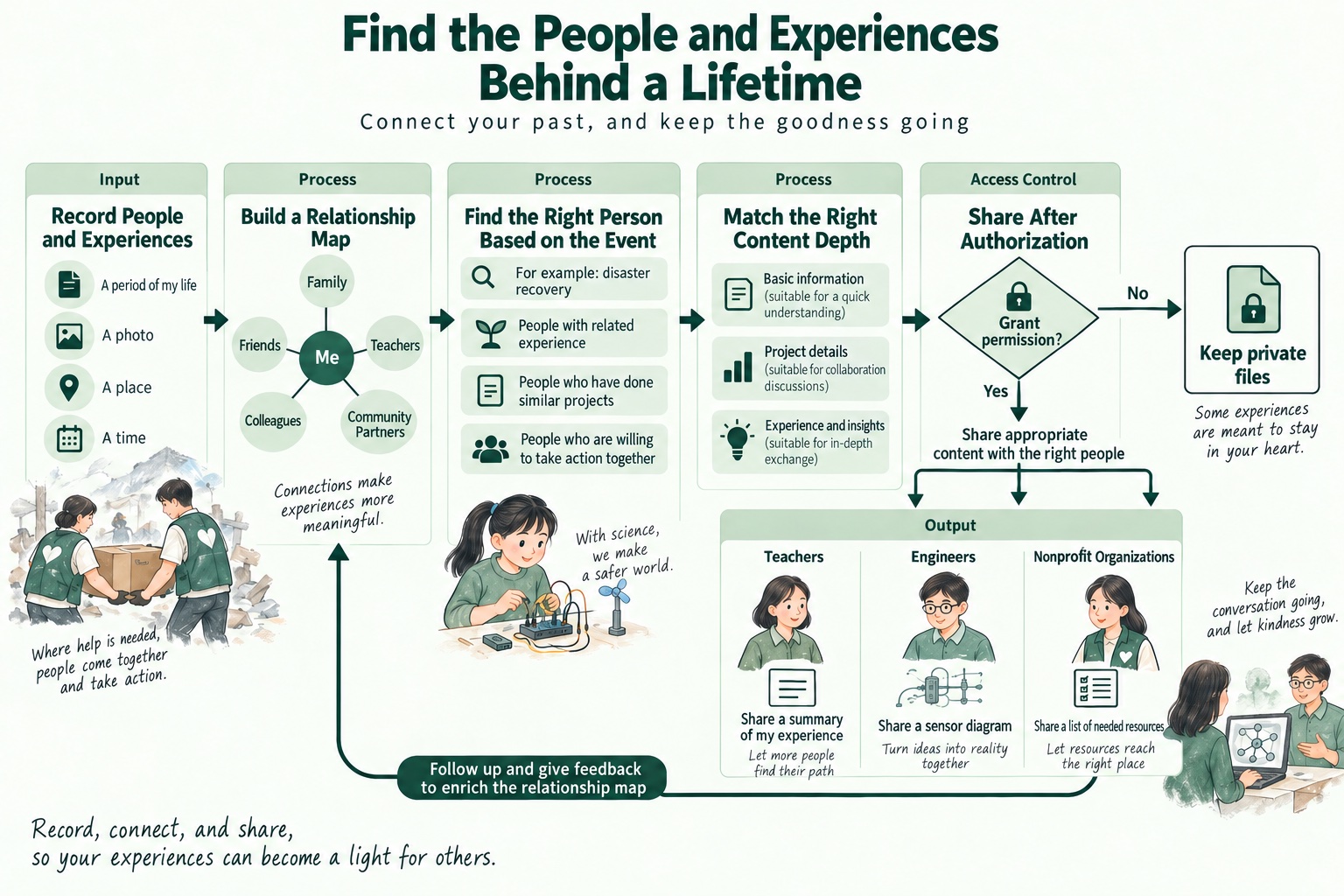
Lin is planning science education for rural schools. “Who understands inexpensive experiment kits and would want to help?” Her relationship graph finds Chen: they met during disaster relief ten years ago, later built open sensors together, and Chen once offered to help rural schools. Their shared projects, interests, mutual help and latest conversation provide the context.
Lin writes an idea for experiments using old phones. Within an existing continuing mandate, agents responsible for different relationships choose relevant recipients and disclosure depth: equipment details for Chen, lesson ideas for an alumni group and resource needs for nonprofit partners. Lin can inspect, correct or pause those choices without choosing every recipient again. Relevance and permission are assessed separately.
Chen asks for earlier sensor designs. A delegated second presence can explain public experience and deliver an approved file. Unpublished drawings owned by a former partner stay subject to their source permissions and return to Lin for a decision. Both sides can continue within their own mandates; real progress and corrections update the relationship, supporting sustained personal exchange instead of indiscriminate broadcasts.
General valueConnect people, events, experience and shared goals into lasting relationship context. Move from “Who do I know?” to “Who can help with this?”, with recipient-specific sharing, bounded follow-up and authorized file delivery.Personal edition
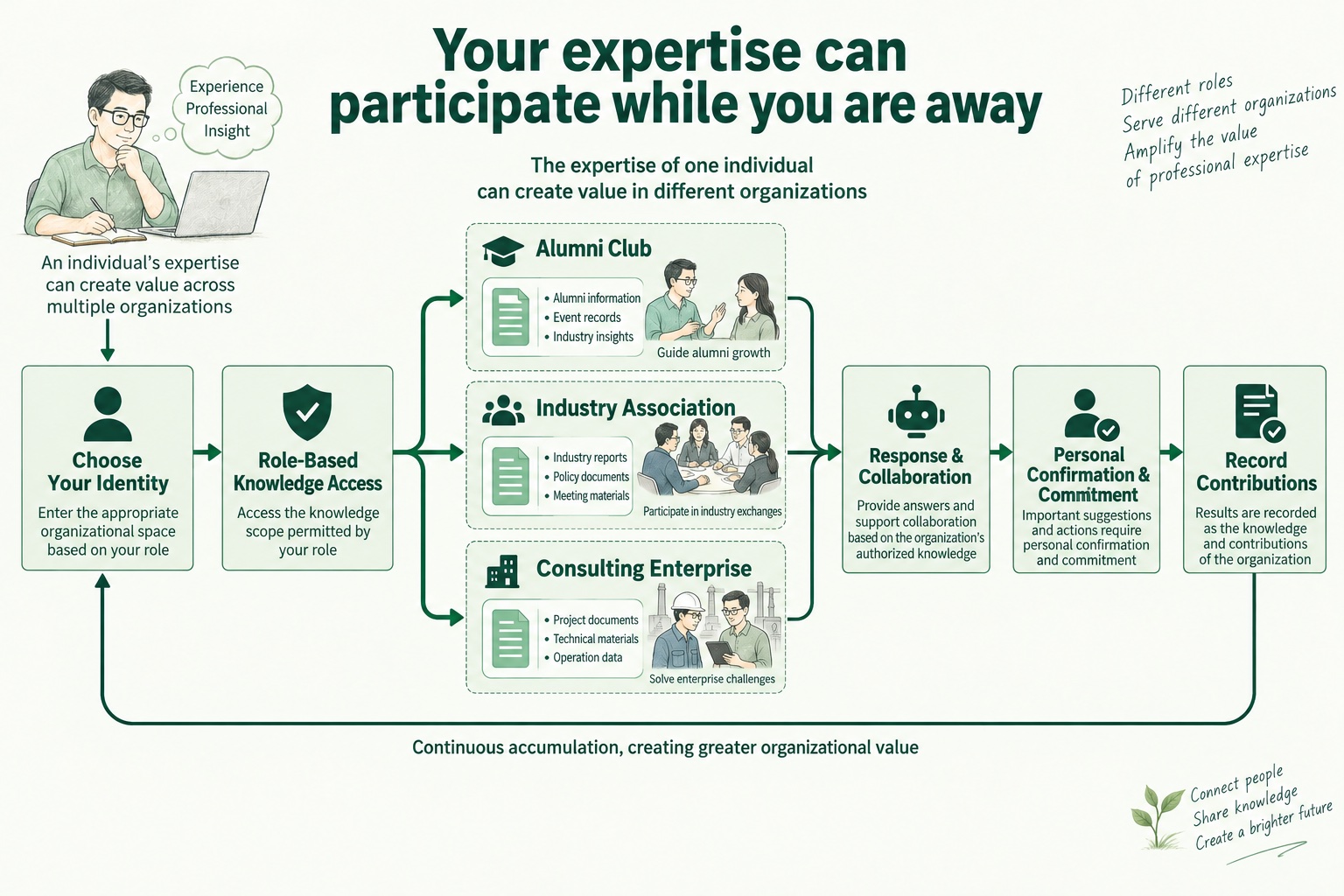
Zhou is an experienced supply-chain adviser, an industry association member and an alumni mentor. He also advises a small manufacturer each month. He opens different methods and selected experience to each role, with separate subjects, audiences and expiry dates. Joining an organization does not expose his entire personal knowledge.
An association member asks how small buyers can give suppliers predictable demand. His second presence explains his method using approved examples. A manufacturer’s buyer asks which offer to choose; with separately authorized company quotes and schedules, it prepares comparisons and missing questions for the team. Association members cannot see those quotes.
Contractual commitments, private supplier assessments or new representation rights return to Zhou or the company’s authorized decision maker. He later reviews feedback and corrects advice; only explicitly adopted contributions become company knowledge. Even a temporary adviser can contribute continuously while personal material, organizational adoption and formal approvals keep their own owners.
General valueBring personal knowledge into companies, associations and communities through bounded, revocable representation. Extend its usefulness while preserving human takeover, explicit organizational adoption and responsibility.Enterprise edition
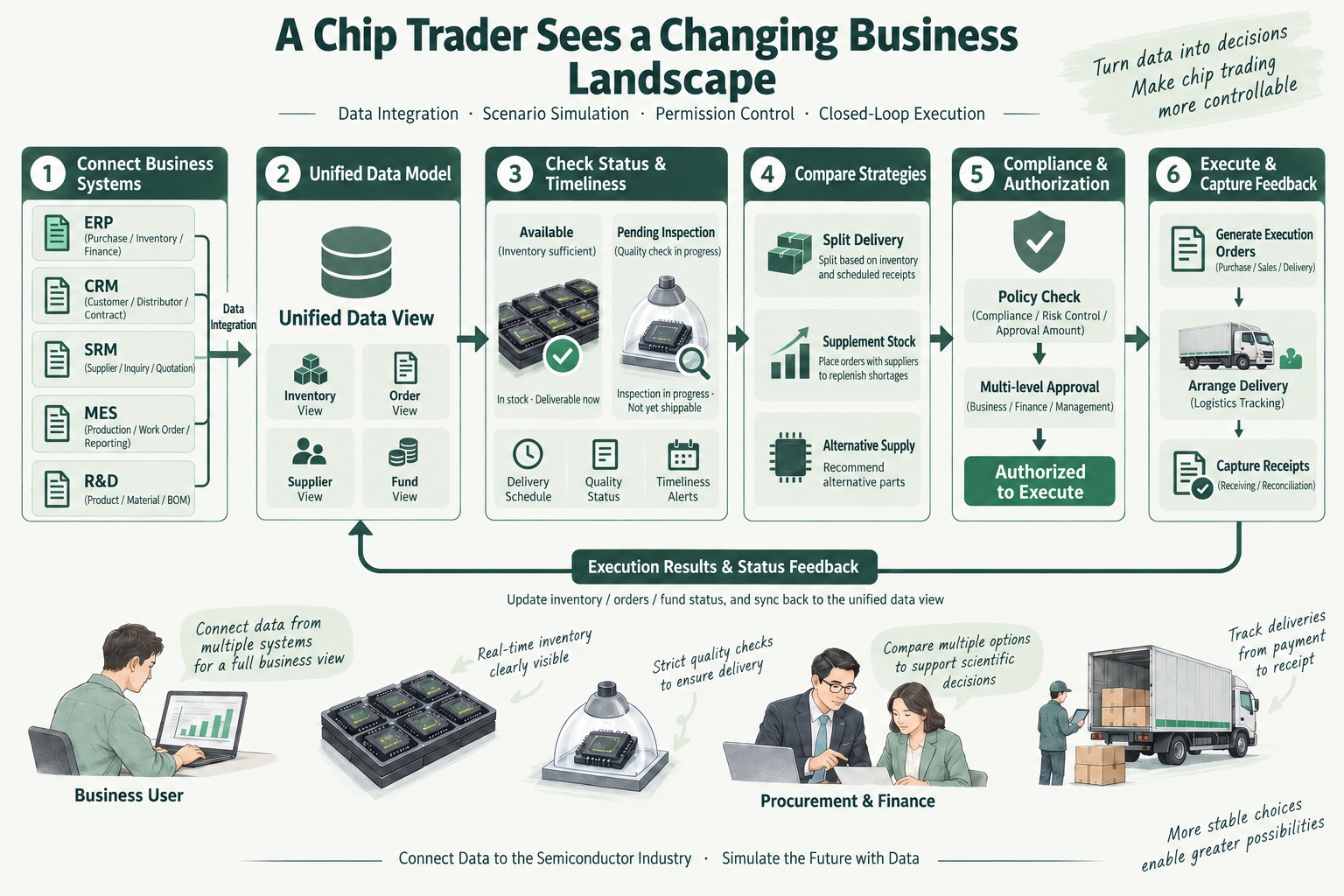
Fictional Clearstream Chips receives an order for 20,000 MCUs due in three weeks. CRM holds the promise, ERP lists 8,000 in stock, SRM holds an offer for 12,000, and warehouse records show 3,000 of the stocked parts awaiting inspection. Kernel maps customer, part, lot, offer, stock, payment and schedule into common business meaning, showing source freshness and conflicts. Stock is not automatically deliverable stock.
The owner asks when the whole order can arrive and where cash will be tied up at this price. Within authorized data, the agent compares commitments, usable stock, incoming lots and payment terms. Only 5,000 stocked parts are currently deliverable; the existing supplier offer still leaves a 3,000-part gap. A supplier schedule leaves little margin while customer acceptance delays payment. It presents split delivery, added stock and an alternative supplier, with margin assumptions, cash needs and conditions requiring confirmation for sales, purchasing, warehouse and finance to assess together.
After a decision, the agent prepares purchase requests and schedule updates only through connected, authorized operations. Formal changes follow their approval flow and return receipts. Inspection clearance or a delivery change triggers refresh and reassessment as supported by actual integrations, with stale data visible. Existing systems retain their responsibilities, and unknown information remains unknown.
General valueTurn separate systems into a common, traceable and continually updated business view. People and AI can ask, analyze, decide and act with authorization; actual integration and validation determine freshness, confidence and execution scope.Enterprise edition
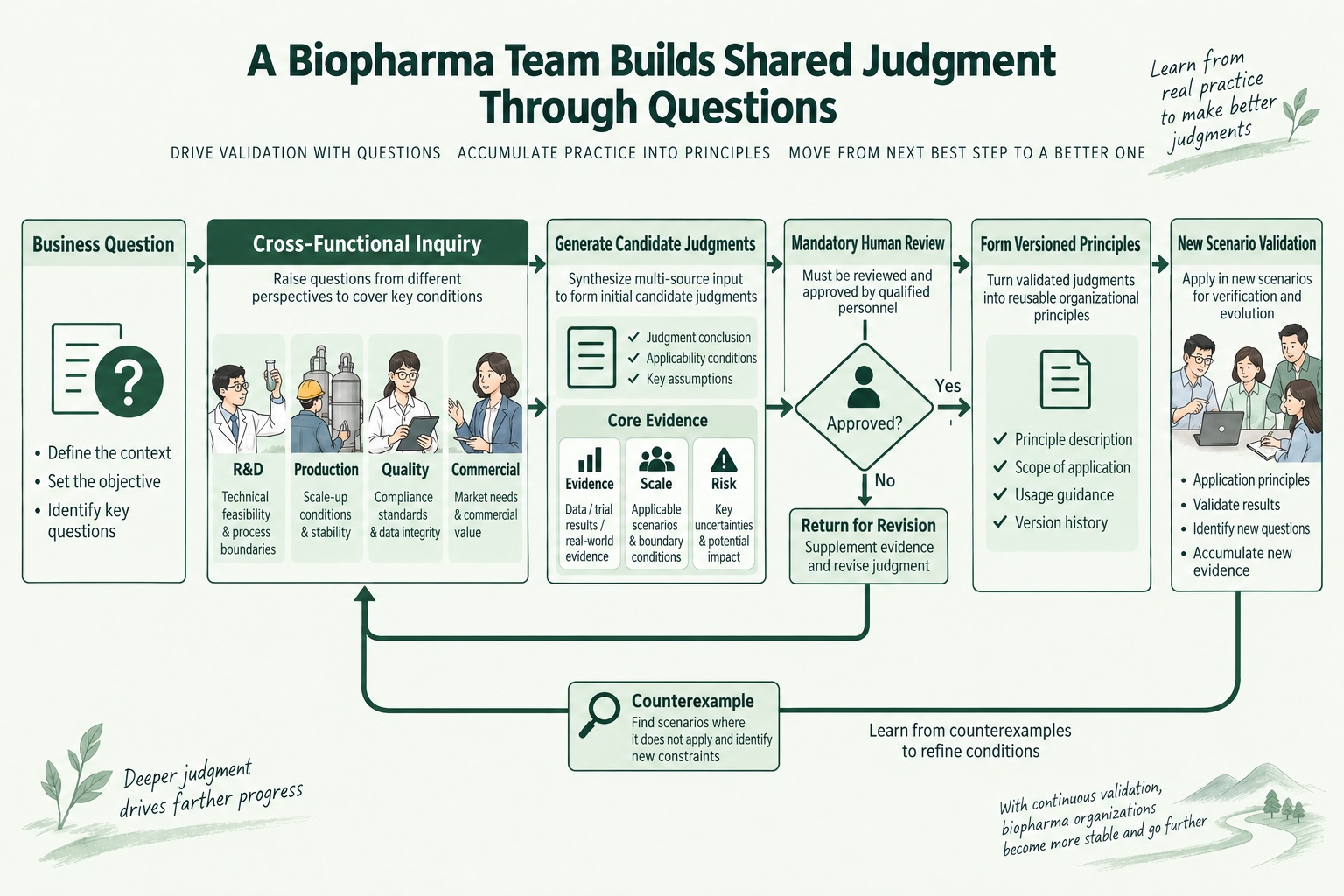
Fictional Clearwell Bio is considering a project’s move to pilot production. R&D calls the process stable; manufacturing says a new raw-material lot has not been tested; quality notes that evidence covers only two small-scale runs. Kernel asks each role what “stable” means: at which scale, under which conditions, supported by which records, and with which unresolved counterexamples?
The answers become source-backed candidate explanations. A schedule discussion reveals competing priorities: commercial timing, learning speed, repeatability and evidence completeness. The team agrees that commitments must state evidence maturity, applicable scale and unresolved risks. This becomes an organizational principle only after review and explicit adoption, rather than a model announcing the company’s position.
On another project, the agent uses the adopted principle to ask different roles and compare outcomes. A material change or larger scale introduces counterexamples; the team revises the principle while preserving versions and scope. Its experience, operating logic and philosophy grow. “Developing a will” means collectively tested aims and tradeoffs; research, quality review and formal release remain with responsible people and processes.
General valueConnect questions across roles, outcomes and counterexamples into organizational learning. Make scattered experience an evidenced, revisable shared judgment; organizational will is a governed direction, not machine consciousness.Agents
Agents participate in real work with clear authority and accountability.
Help with information, context, analysis, proposals and delegated tasks. When working within an organization, they also respect the permissions granted to the person.
Work toward adopted goals under organizational policies and responsibilities. Assign an owner, collaborators, deliverables and permitted actions to each agent.
Selected simulated examples; agent roles can expand with goals and responsibilities. Actual data access, automation and external delivery depend on connected capabilities and current authorization.
Personal assistant agents
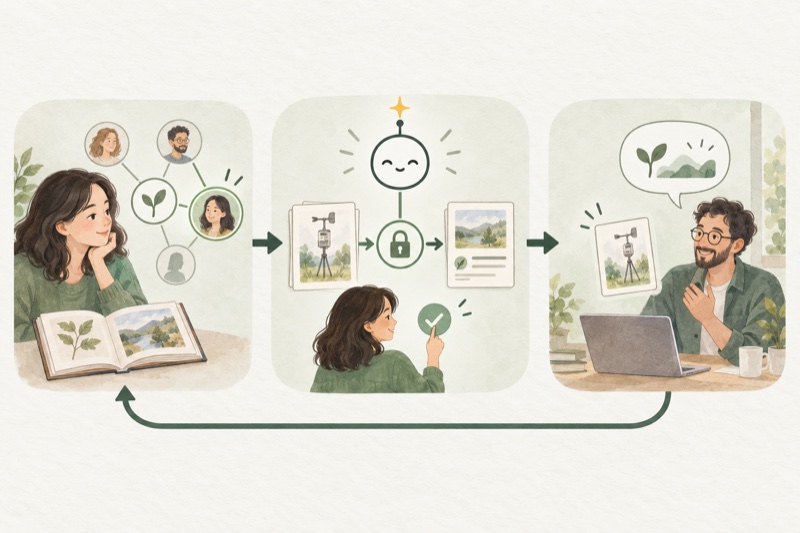
Find partners for a rural science project, prepare sharing at the permitted depth, continue follow-up and update relationship context.
Personal assistant agents
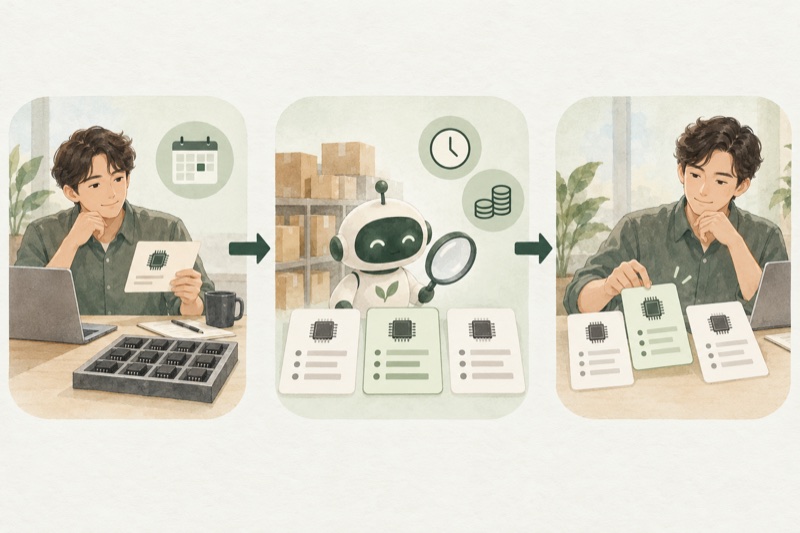
Help a chip salesperson compare customer demand, available stock and lead times. Mark missing evidence and prepare options for the person to choose.
Company and organization-governed agents
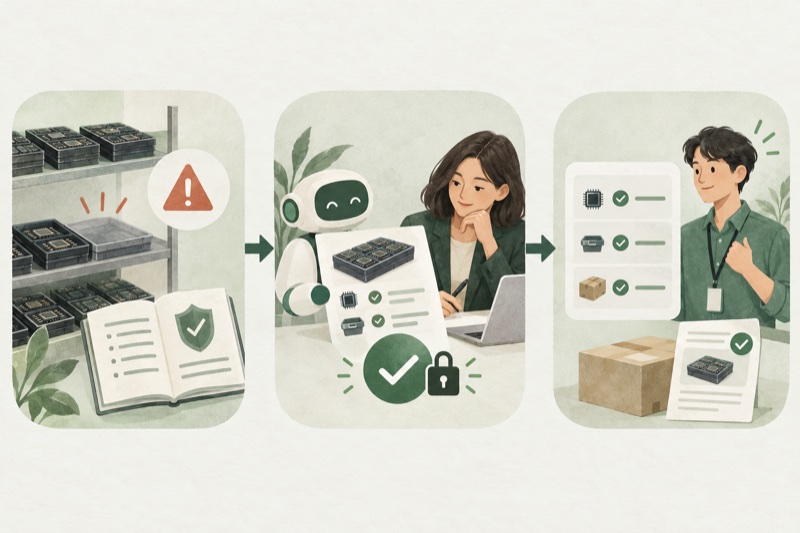
Identify a stock gap under an adopted replenishment policy. Prepare a proposal, obtain the required approval and follow authorized tasks through delivery.
Company and organization-governed agents

Link a customer issue to orders, batches and technical records. Coordinate investigation and escalate replacements, compensation or liability to the authorized owner.
Company and organization-governed agents
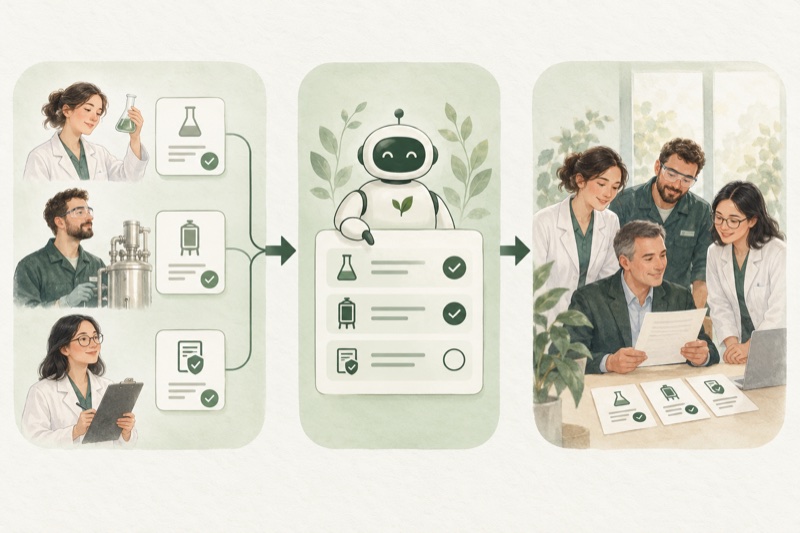
Collect R&D, manufacturing and quality prerequisites for a biopharma pilot project. Surface gaps, coordinate tasks and check delivery evidence.
Company and organization-governed agents
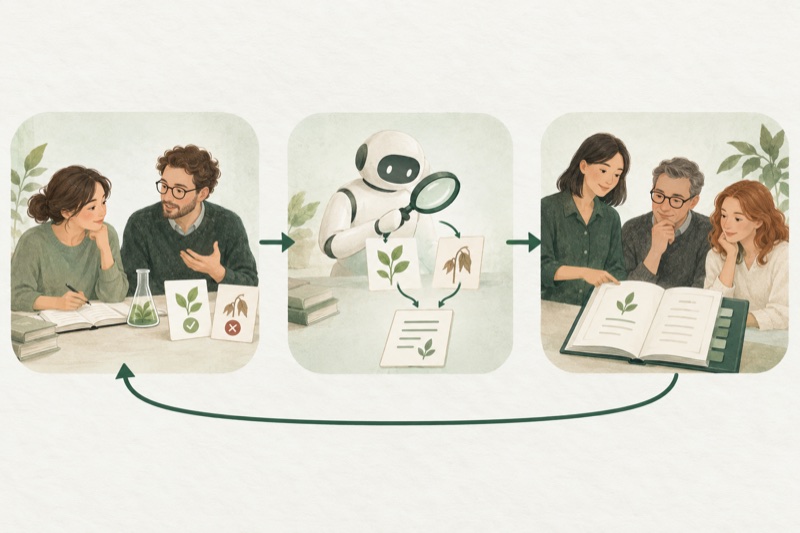
Ask about conditions and counterexamples during a debrief. Prepare source-backed candidate principles for organizational review, adoption and later feedback.
CHOOSE WHERE TO START
Connect the knowledge we build with real data. Let agents understand our work, take part in authorized actions, and learn from verified outcomes.
View setup stepsAdministrators deploy and register the service, configure its gateway and invite members. A reachable enterprise gateway can connect directly.
View setup stepsConnect the personal or enterprise Kernels you are authorized to use, using the address from their administrator. Members do not install or deploy a server.
My KernelsYOUR DATA, YOUR DOMAIN
Authorize each personal or enterprise domain separately. Each keeps its own credentials and session; selecting a domain never combines permissions or moves business data.
Encrypted channels protect traffic between the client and the domain endpoint, over a direct connection or permitted relay. Coordination does not replace domain authorization.
Choose where the domain is hosted. Its owner controls members and access to business data. Source credentials stay with the responsible service; platform registration does not grant business access.
Domain-scoped authorization and encrypted transport are implemented. The complete client flow for arbitrary independent domains is still being developed and verified.
Relays still see routing metadata. Web clients trust the published code. Configured external AI or speech services may receive authorized content; privacy depends on their policies too.
CONNECTION WITH CONTROL
Platform registration identifies accounts and registered hosts. Each personal or enterprise space decides who can enter and what they may do.
An official hosted space or reachable enterprise gateway can use a direct connection. A computer host can use encrypted relay; enterprise fallback requires explicit permission.
Agents act within granted permissions. Important knowledge and rules are reviewed, and results remain traceable as experience accumulates.